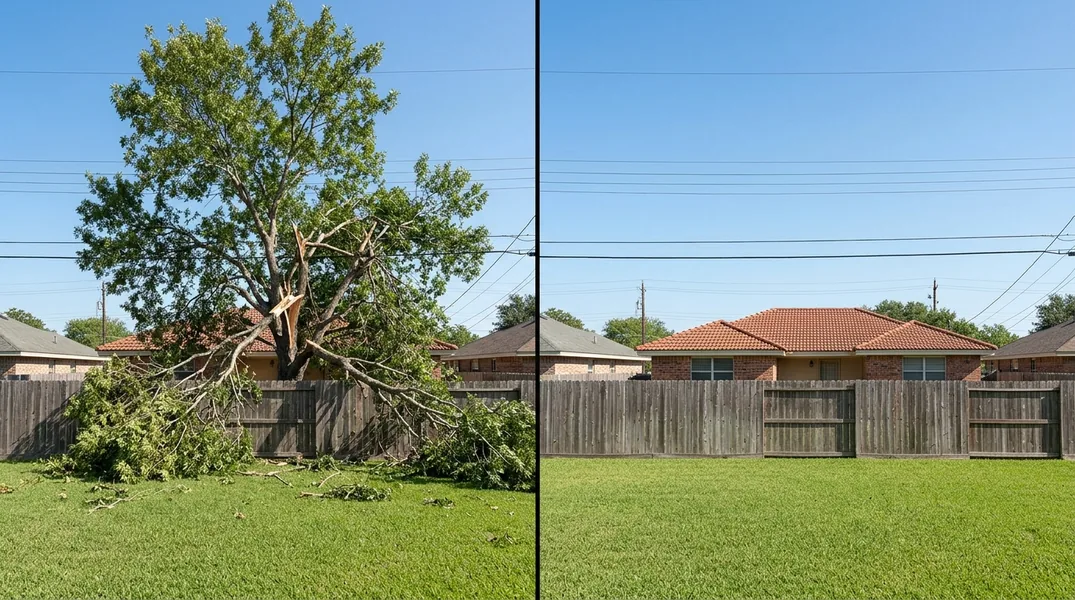
Understanding the Difference: Trimming vs. Removal
When you notice a problem with a tree on your property, the first question that comes to mind is often: does it need to be fixed or removed? This is one of the most common questions we hear at McAllen Tree Service, and the answer isn't always straightforward. Tree Trimming & Pruning and Tree Removal are two very different procedures with different goals, costs, and long-term outcomes for your landscape.
Tree Trimming & Pruning is a maintenance procedure designed to keep a healthy tree in good shape. It involves selectively removing branches to improve the tree's structure, promote growth, remove dead wood, and enhance its appearance. Trimming is typically done every one to three years, depending on the species and your aesthetic goals. The tree remains in place and continues to grow and provide shade and environmental benefits to your McAllen property.
Tree Removal, on the other hand, is a complete extraction of the tree from your property. This is a more invasive and costly procedure that's only recommended when the tree poses a safety risk, is diseased beyond recovery, or is otherwise unsuitable for your landscape. Once a tree is removed, you lose all the benefits it provided, which is why it should only be considered as a last resort.
Signs Your Tree Needs Trimming, Not Removal
A healthy tree can often be saved with proper trimming and maintenance. An experienced arborist in McAllen will look for several key indicators that suggest trimming is the right choice. If your tree has dead or diseased branches but the main trunk is still strong and the majority of the canopy is healthy, trimming is usually the solution. Dead wood should be removed to prevent it from falling and to redirect the tree's energy to healthy growth.
Overgrowth is another common reason for trimming. Trees that have grown too large for their space, are interfering with power lines, blocking views, or rubbing against your home can be brought back into balance with professional pruning. Branches that cross or rub against each other, or that grow inward toward the trunk, should also be removed. These issues don't indicate a problem with the tree's overall health. They're simply maintenance matters that keep the tree functioning well and looking attractive.
Trees with minor pest infestations or early-stage fungal issues can sometimes be managed through trimming as well. Removing affected branches can slow the spread of disease and give the tree a chance to recover. However, this depends on the severity of the problem and the specific species of tree involved. This is where the expertise of a experienced arborist becomes invaluable.
When Tree Removal Near Me is the Only Option
There are situations where Tree Removal is genuinely necessary. A tree that is dead, dying, or severely diseased may not recover regardless of how much you trim it. If more than half of the canopy is dead, if the trunk has large cavities or deep cracks, or if the tree is leaning significantly, removal is often the safest choice. Trees in these conditions are unpredictable and pose a serious risk to your home, vehicles, and family members.
Safety is the primary concern in these cases. A tree that could fall during a storm or high wind event should be removed before it causes damage or injury. If your tree is growing too close to your house, has roots damaging your foundation or plumbing, or has branches consistently falling, removal may be the most practical solution. Similarly, if a tree is severely infested with pests like termites or carpenter ants, or if it has an aggressive disease that spreads to nearby trees, removal is often recommended.
Sometimes, a tree simply doesn't fit your landscape anymore. A tree that was planted years ago may have outgrown its space or become incompatible with your property's current use. In these cases, removal allows you to replant with a species better suited to your needs and climate. After removal, many homeowners choose to invest in Stump Grinding to fully reclaim their yard space.
How a Professional Arborist Evaluates Your Tree
A experienced arborist doesn't make the trimming versus removal decision based on a single factor. Instead, they perform a comprehensive evaluation of the tree's overall health, structure, and risk level. This process typically begins with a visual inspection of the trunk, branches, and foliage. The arborist looks for signs of disease, pest damage, structural weakness, and overall vigor. They assess whether the tree is actively growing and producing healthy leaves, or whether it's showing signs of decline.
The arborist will also consider the tree's age, species, and the local climate conditions in McAllen. Some species are more prone to certain diseases or pests in this region, and some are naturally shorter-lived than others. They'll evaluate the tree's position on your property, its proximity to structures and utilities, and how important it is to your landscape design. They may also use specialized tools to assess internal decay or root health if necessary.
After gathering all this information, the arborist will discuss their findings with you and make a clear recommendation. They'll explain their reasoning in terms you can understand and discuss your options. If trimming is recommended, they'll outline a maintenance schedule. If removal is necessary, they'll explain why and discuss what comes next, including options for Stump Grinding and replanting.
The Benefits of Regular Tree Trimming in McAllen
One of the best ways to avoid the need for tree removal is to invest in regular tree pruning in McAllen. Trees that are maintained consistently are healthier, safer, and more attractive. Regular trimming removes dead wood before it becomes a hazard, improves air circulation through the canopy, and allows the tree to direct its energy to healthy growth. For homeowners, this means fewer emergency situations and lower long-term costs.
Proper trimming also enhances the aesthetic value of your property. A well-maintained tree looks attractive and well-cared-for, which can actually increase your home's curb appeal and value. Regular maintenance also helps trees resist pests and diseases more effectively. A tree in good structural condition with healthy foliage is simply more resilient and better able to handle the environmental stresses of our local climate.
The timing and frequency of trimming depend on your tree species, age, and local conditions. Most trees benefit from trimming every two to three years, though some may need attention more frequently. Spring and late winter are often the best times for most species, though this can vary. A professional arborist can recommend a trimming schedule tailored to your specific trees and goals.
What to Do Next: Getting Expert Advice for Your Trees
If you're unsure whether your tree needs trimming or removal, the best step is to schedule a professional evaluation. McAllen Tree Service offers free consultations where our experienced arborists can assess your trees and provide clear recommendations. There's no obligation, and you'll gain valuable insight into the health of your trees and the best way to care for them going forward.
Don't wait until a tree problem becomes an emergency. Early intervention through professional trimming can often prevent the need for removal down the road. Contact McAllen Tree Service today at (956) 306-1646 to schedule your free estimate. Our team is ready to help you make the right decision for your property and your trees.
Looking for a professional tree service contractor in McAllen? McAllen Tree Service responds fast for all your tree service needs.
Get a Free QuoteOur services: Tree Removal · Tree Trimming & Pruning · Stump Grinding